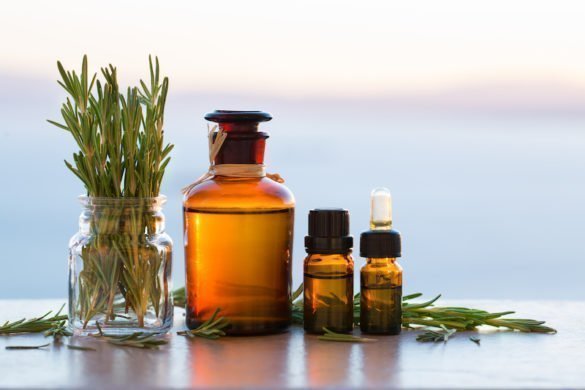
Known for its pleasant, delicate fragrance, rosewood essential oil is regarded as a premium product with many qualities. Used in both wellbeing and beauty, this oil suits all skin types and has its place in anti-ageing skincare. Whether applied to the skin or used in a diffuser, it is a precious ally well worth getting to know. In this article, you will find out where this oil comes from, what it can bring to skin marked by stretch marks, how to apply it and which precautions to follow.
Where does rosewood oil come from?
As its name suggests, this oil is derived from a tree known as rosewood. Red and pink in colour, this tree belongs to the Lauraceae family and features yellow flowers and simple leaves. It is typically found growing wild in the Amazon rainforest or on the island of Madagascar. To obtain the essential oil, experts steam-distil the wood after it has been reduced to wood chips.
The oil is often colourless after distillation, though it can also take on a pale yellow hue. Its scent is refreshing, floral and even slightly woody. The main components of rosewood oil are linalool, alpha-terpineol, geraniol, nerol and cineole, compounds that are valued in skincare. Due to overharvesting, rosewood is now listed among protected species.
Rosewood essential oil: an ally for skin prone to stretch marks
The skin is an elastic organ whose suppleness is put to the test every day. Yet it has its limits, and when those limits are reached, the skin can crack and tear, giving rise to stretch marks. They can be difficult to get rid of, which is why an essential oil can be a welcome addition to your routine. Applied to the skin, rosewood essential oil offers beneficial, balancing qualities for combination, dry and oily skin alike.
The revitalising side of rosewood essential oil
Linalool is a popular ingredient in skincare designed for sensitive skin. Stretch marks can be a real source of self-consciousness, especially at the pool or on the beach. This oil can be added to a care routine for delicate skin, particularly on areas where stretch marks often appear, such as the stomach, thighs and arms.
Use in massage
Once diluted, rosewood essential oil can be used to massage areas marked by stretch marks. It then becomes part of a regular skincare routine.
When used for massage, it offers a pleasant moment of self-care and a feeling of comfort as you apply it.
How do you apply rosewood essential oil to stretch marks?
To use the oil on areas with stretch marks, it is best to follow a few simple application techniques. The oil is used to massage the area concerned, in the recommended amount.
As it can sometimes cause irritation, this oil should be blended with a neutral lotion or cream that contains no active ingredients likely to alter its properties. Once the blend is ready, simply massage it into the area with stretch marks using circular movements. This massage can be done every day for a few minutes.
Although rosewood essential oil is popular for caring for stretch marks, it must not be used during pregnancy; if you have any questions, ask your doctor for advice. As mentioned above, it should always be diluted in a cream, a lotion or a carrier oil.
That said, there is also the Cellublue Stretch Mark Oil, which has been formulated to care for skin prone to stretch marks. It can be used by all women, including pregnant and breastfeeding women!
The massage oil that helps prevent stretch marks from appearing*, during pregnancy and beyond
*User test on 21 volunteers over 3 weeks, based on participants' feedback.
- Why does it work?
Related articles
- 5 effects of sweet almond oil on stretch marks
- LED treatment for stretch marks – does it really work?
- Essential Oils and Cellulite: Uses and Precautions
Useful categories: Stretch Mark Care, Stretch Marks.