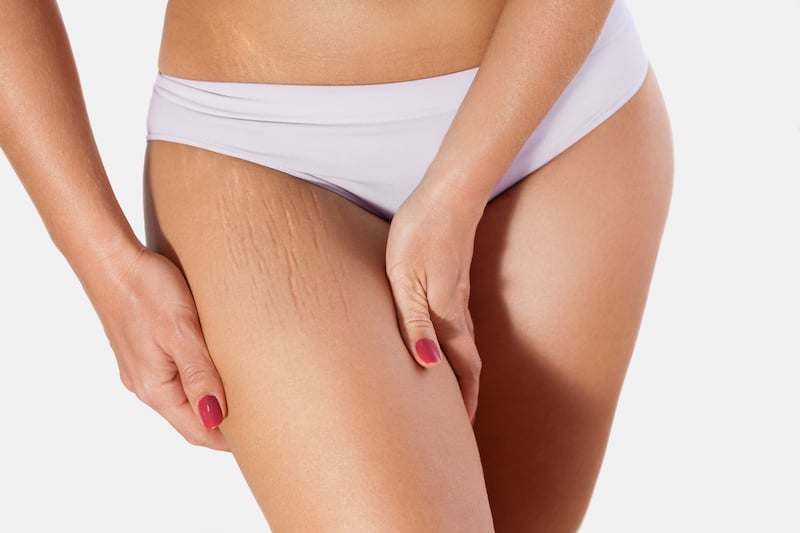
Affecting the superficial cells of the skin, stretch marks appear as purplish, pink or white streaks on the surface of the epidermis. They are a type of scar that forms in specific areas when the skin stretches too quickly. This can happen during growth spurts, rapid weight gain or pregnancy, for example.
Considered unsightly by many, stretch marks are something a lot of people want to get rid of. There are various techniques to reduce their appearance, including peeling. This abrasive method helps minimise — or even eliminate — visible skin imperfections. Several types of treatment are available, depending on the area to be addressed.
Sommaire
What is a peeling treatment?
Derived from the verb to peel, peeling is used to exfoliate the skin and restore its natural radiance and evenness. The technique stimulates the production of collagen and elastin fibres, both essential for skin regeneration. Exfoliation removes the outer layer of the epidermis — and sometimes part of the dermis — eliminating damaged cells and replacing them with fresh new ones. These treatments can theoretically be performed on any part of the body. The most commonly treated areas are the face — particularly to reduce wrinkles and melasma — as well as the stomach, arms, thighs and buttocks, which are the areas most prone to stretch marks.
Two main aesthetic techniques fall under this category: mechanical peeling and chemical peeling.
Mechanical peeling
Also known as “dermabrasion”, this technique involves sanding down the skin using a slightly abrasive rotating brush, encouraging it to rebuild healthy collagen fibres. More effective than a standard scrub, this procedure is primarily aesthetic, targeting skin imperfections and blemishes. Mildly uncomfortable, the treatment initially causes redness and swelling. It is performed under local anaesthesia, and visible improvement typically appears around 15 days later.
Chemical peeling
The most widely used method, chemical treatment is divided into three levels, each tailored to the depth of the skin damage. A chemical peel involves applying an acidic solution to the skin for a few minutes to break down dead cells, then removing it to trigger the production of new cells through controlled exfoliation.
The solution used contains a low concentration of fruit acids for gentle treatments, glycolic acid or trichloroacetic acid for medium-depth and deeper procedures. The chemical reaction destroys the upper layers of the skin, allowing it to regenerate.
Chemical peeling is primarily intended for people with significant skin concerns. As it acts deeply on both the epidermis and dermis, this type of peeling must only be performed by a qualified medical professional.
This treatment requires skin preparation several weeks before the session, involving the application of a mildly exfoliating cream that also reduces melanocyte activity to minimise the risk of post-treatment pigmentation.
The burning sensation and aftereffects (crusting, itching, intense peeling) make this option quite uncomfortable. Results become visible after several weeks, and a minimum of six sessions is typically recommended. This chemical protocol is the most demanding, the longest and the most costly — but also the most effective.
Why is peeling effective against stretch marks?
Since stretch marks are superficial scars that can be visibly reduced, peeling offers an alternative or complementary approach to other treatments. It can be performed on various areas of the body and at different stages of scar development. While multiple sessions are required, it is also one of the most effective long-term solutions.
An alternative solution
Creams, oils, lotions and laser treatments are all aesthetic options for reducing stretch marks. LED photobiomodulation and abdominoplasty can also be added to this list. Peeling is yet another option. A dermatologist will recommend one approach over another based on the size of the area to be treated, skin quality and the patient’s overall health.
A medical treatment
The use of corrosive products on the skin requires great care — choosing the right practitioner is essential when undergoing a chemical peel. The intensity of the treatment is adapted according to the location, depth and age of the stretch marks. These factors also help determine how many sessions are needed to achieve a satisfactory result.
Treatment duration
Each session lasts an average of 30 minutes. Between 4 and 6 treatments spaced at least two weeks apart are required. Depending on the technique used, results can last anywhere from 1 to 15 years.
As chemical procedures can be particularly uncomfortable, the dermatologist may treat small areas at a time to allow the skin to recover between sessions. This precaution naturally extends the overall duration of the treatment course.
Cost of peeling treatments
The price of a treatment varies depending on the technique used, the depth of the stretch marks and the total number of sessions required.
For a mechanical treatment, a single session costs at least €60. For a light chemical peel, expect to pay a minimum of €80 per session. Medium and deep treatments range from €150 to €800. Pre- and post-treatment costs (creams, dressings, etc.) should also be factored in.
The Cellublue anti-stretch mark routine

All these products work in synergy to help prevent new stretch marks from forming and to improve the appearance of existing ones. Suitable for all skin types, the scrub and brush gently exfoliate, the oil helps prevent stretch marks from appearing, and the cream supports skin repair. For best results, use them together as part of your daily beauty routine.