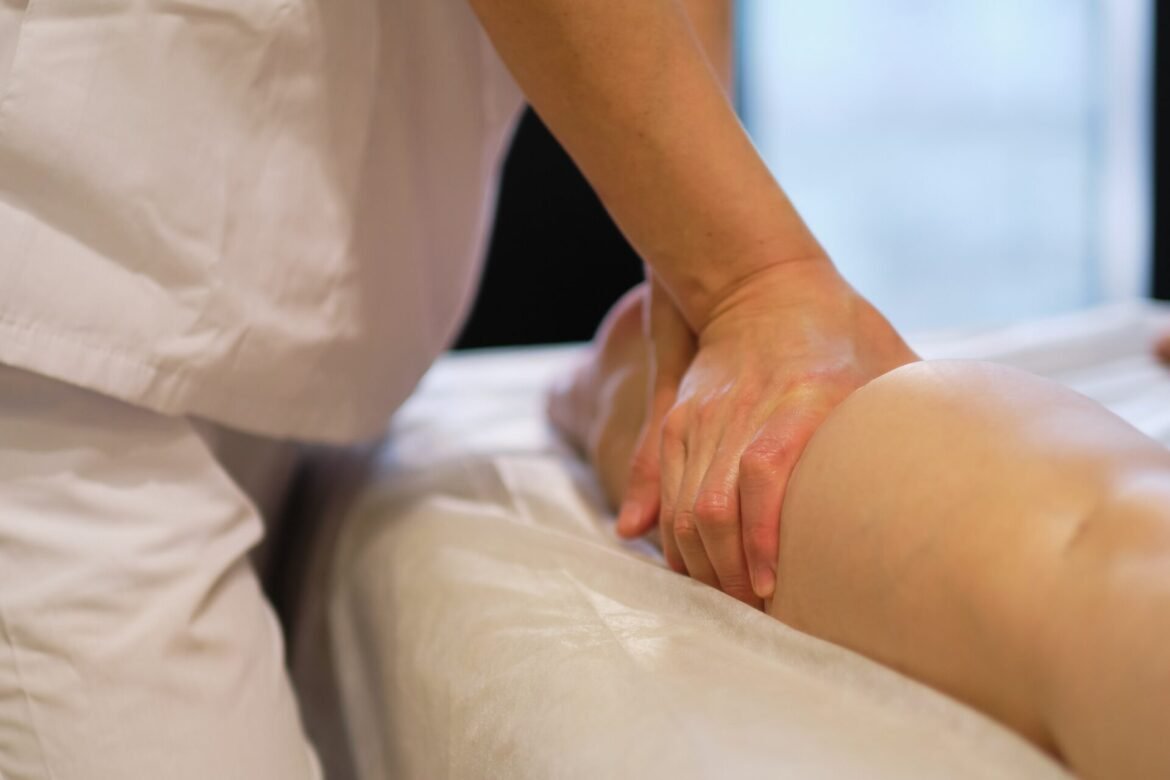
This guide on heavy legs helps you understand the subject, choose a coherent order of action and know which points to deepen next according to your needs.
It is not used to pile up isolated advice. It is used to make better decisions: what to prioritize first, what signals to observe, what pace to maintain over 30 days and what articles to consult next to go deeper without going in all directions.
When this guide is the right starting point
This guide is relevant if circulatory fatigue returns often, particularly at the end of the day, at work, during hot periods or during periods of prolonged sedentary lifestyle. If you feel like you’ve already read a lot of content without knowing what to do next, this page especially helps to put your priorities in the right order.
Useful diagnosis before taking action
Heavy legs are not just a vague feeling. They often depend on a mixture of slower circulation, retention, static posture, heat and insufficient recovery. Before increasing the intensity, the most useful thing is to make a very simple diagnosis: what is blocking you today, which lever seems most accessible and for how long can you remain regular without excessive friction.
- Time of onset of symptoms during the day or week.
- Time spent sitting or standing without intermediate steps.
- Level of hydration and salt consumption.
- Response to walking, leg raising or gentle massage routines.
What to prioritize first
On heavy legs, results rarely come from a single spectacular move. They more often come from a realistic basis, repeated long enough that we can distinguish what really helps from what just feels novel.
- Choose a main goal instead of treating all symptoms at once.
- Stabilize the frequency before seeking more intensity.
- Link local routine to sleep, movement, hydration and nutrition when relevant.
- Measure progress over several weeks, not a single session or photo.
30-day action plan
The most effective thing is not to change everything at once. The most effective is to roll out a progressive framework. Each phase below serves to consolidate a lever before adding another, which makes the guide more actionable and reduces the risk of abandonment.
Phase 1
Week 1: put movement back in the right place with regular active breaks and a very simple audit of time spent still. The objective is not to be perfect, but to obtain a sufficiently stable framework to be able to compare the weeks with each other and understand what is worth keeping.
- Define a simple and observable success criterion.
- Reduce any unnecessary friction in scheduling or materials.
- Note the initial situation so you can compare afterwards.
Phase 2
Week 2: install a 10-minute circulation routine several times a week without seeking excessive intensity. The goal is not to be perfect, but to obtain a sufficiently stable framework to be able to compare the weeks with each other and understand what is worth keeping.
- Install a realistic frequency before wanting to go further.
- Keep the same order of execution to read the signals more clearly.
- Check that the routine remains comfortable and repeatable.
Phase 3
Week 3: reinforce recovery logic with walking, ankle-calf mobility and heat management. The objective is not to be perfect, but to obtain a sufficiently stable framework to be able to compare the weeks with each other and understand what is worth keeping.
- Slightly increase the precision, not suddenly the intensity.
- Modify only one lever at a time.
- Compare with the first week rather than with an abstract ideal.
Phase 4
Week 4: stabilize the protocol that provides the most relief and adapt it to the days that are actually the most exposed. The objective is not to be perfect, but to obtain a sufficiently stable framework to be able to compare the weeks with each other and understand what is worth keeping.
- Keep what already works instead of starting from scratch.
- Remove what complicates without bringing any real gain.
- Prepare for the next month with one clear priority.
Realistic cadence over one week
To avoid the guide remaining theoretical, here is a simple cadence to follow. She does not seek maximum performance: she seeks continuity, because a routine that can be maintained over several weeks delivers much more results than an overly ambitious sequence abandoned after a few days.
- A preparation time at the start of the week to choose the priority, the right complementary step and the follow-up criterion.
- Two to four short slots dedicated to the main lever of the guide, depending on actual fatigue and availability.
- A mid-week checkpoint to adjust a single parameter if necessary, no more.
- A simple weekend assessment with comparable photos, sensations and notes on actual adherence to the routine.
How to track results without making a mistake
With short but frequent routines, the feeling of heaviness often decreases, the return to comfort becomes faster and the body reading is clearer at the end of the day. Good follow-up is not about seeking immediate transformation. It consists of verifying that the routine remains tenable, better calibrated and increasingly readable. It is this monitoring which then allows us to better direct ourselves towards the good content of the site instead of starting from scratch with each doubt.
- Level of heaviness at the end of the day.
- Number of active breaks or walking minutes actually completed.
- Leg response after elevation, massage or cooler shower.
- Difference between static days and more mobile days.
Frequent mistakes to avoid
- Stay still for several hours without interruption.
- Massages too aggressively on an already sensitive area.
- Multiplying techniques without knowing which one really relieves.
- Forgetting to adjust the routine according to actual fatigue or heat.
Frequently asked questions
What to do at the end of the day when your legs are tight?
Gentle walking, light leg elevation and hydration are often the most useful actions in the short term.
Is the suction cup suitable?
It can be useful if the technique remains gentle, progressive and compatible with your skin tolerance.
What frequency should you aim for to feel a benefit?
Short but repeated actions during the week are generally more effective than a long session from time to time.
Can the problem return despite a good routine?
Yes, especially if the daily context remains very static. The challenge is then to reduce the frequency and intensity of the episodes.
Complementary guides
These guides complete the subject with close angles, to help you delve into only what you are really missing.
- Water Retention Guide
- Drainage Guide Lymphatic
- Anti-Cellulite Massage Guide
- Cellulite: definition, types, causes and solutions to reduce it
Articles to read next
These articles allow you to explore a specific point in greater depth when your priority is already clear, without dispersing yourself into too many avenues at once. times.