
Are you one of the many women who feel self-conscious about stretch marks? But do you know about black soap? Do you know its benefits and why some people use it to reduce stretch marks? If you’re ready, let’s take a closer look at whether this claim holds up.
First, let’s find out what black soap actually is!
First of all, there are 2 types of black soap: the so-called “cosmetic” kind (for face and body care), and the so-called “household” kind (with chemical components and intended for domestic use only). But since we’re talking about stretch marks, it goes without saying that the cosmetic version of black soap is the one we’re interested in here.
Originally from Africa, this soap is highly prized by women in the East for healthy, beautiful-looking skin. This cosmetic soap is oily and dark in color. It is especially rich in vitamin E, which helps keep the skin healthy.
Real black soap is 100% natural and handmade using plants found in Africa. It is gentle on the face and skin in general. The composition of black soap depends on where it comes from. Moroccan black soap is made with olive oil and potassium hydroxide, while in Nigeria it is made with palm oil, cocoa pods, and other traditionally produced ingredients (1). There are therefore several black soap recipes, resulting in either a solid form or a paste.
Black soap and its benefits for the face and body
Black soap has many benefits for the skin. So the good news is that this type of softening and nourishing soap is suitable for all skin types. Exfoliating, it works deep within the epidermis—ideal for anyone who loves a good scrub. It also acts as a kind of “base” for body care. And that’s not all! Black soap may help fight acne, wrinkles, collagen loss and improve skin texture.
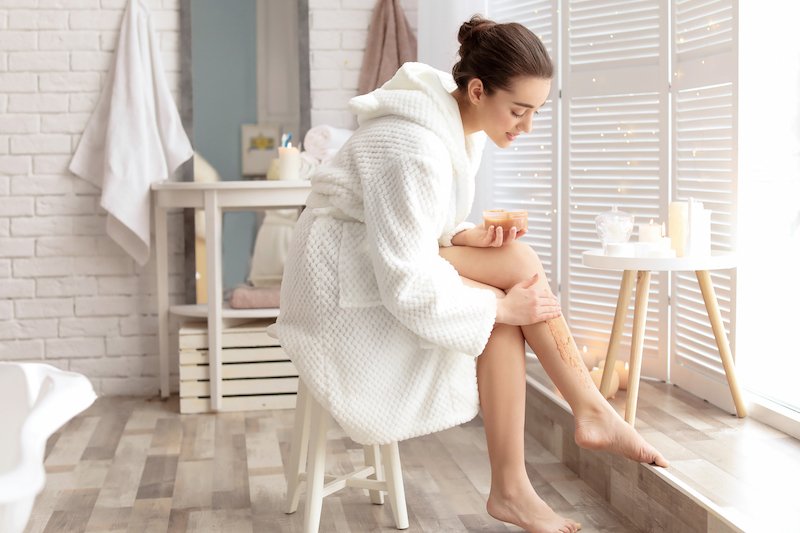
Using this soap regularly (after your baths or showers) helps you say goodbye to impurities as well as dead skin cells. This soap is soothing and hydrating. When used on the face, it leaves the skin smooth and helps protect the epidermis thanks to the fine film it forms. Whether your skin tends to be oily or dry, this soap works across the board. That’s certainly why some of you call it a “miracle soap.” One study showed that using this soap was effective for certain dermatological issues (1). But what about how effective this famous soap is on stretch marks?
What does black soap do for stretch marks?
Our skin doesn’t cope well with drastic change; and after various sudden changes (weight loss, weight gain, pregnancy, etc.), stretch marks can appear (even though they can also often develop naturally). These skin imperfections may be white (when they have been on the body for a long time), or purplish, red (when they are just beginning). But whatever their color, they have one common enemy.
Indeed, thanks to its high vitamin E content, black soap may help reduce the appearance of stretch marks and scars. Thanks to its composition, black soap helps cleanse the skin deeply and nourish it (2). Be careful when choosing your black soap, however. It is better to opt for an authentic, handmade soap rather than an industrial soap, which may not be as effective. But how should you use black soap to see visible results on stretch marks?
There are mainly two options.
The first is simply to use your black soap regularly (and gently) on the area concerned.
As for the second option, it should be prepared ten to fifteen minutes before your bath or shower: to do this, start by opening the pores in the area to be “treated” with hot water (this helps the soap penetrate more deeply); then apply a generous amount of your paste soap, and spend 2 to 3 minutes massaging carefully before getting into the bath or shower. Repeated twice a week, this method can deliver very effective results—especially when followed (once the skin is thoroughly dry) by a natural moisturizing cream to reduce stretch marks.
Choose a natural stretch mark cream, such as the anti-stretch mark cream Cellublue which contains more than 98% naturally derived ingredients. Rich in provitamin B5 and natural active ingredients, it helps support collagen production for plumper-looking skin and visibly softened stretch marks.
